Contents
Gastronomic Studies · Group Project
Plates &
Psyche
The science of emotional cravings — why the food we reach for at 2am isn't really about hunger.
Issue No. 01 — Comfort Food & Emotional Eating
ScrollWhat's

Foundations
What
even is
comfort
food?
Before we get into the brain chemistry, it's worth asking where the term actually came from — and why it always seems to mean something warm.
The phrase "comfort food" only entered common use in the 1970s, but the idea behind it is much older — food as a source of emotional regulation, not just fuel.
Across cultures, the foods people reach for share a surprisingly narrow sensory profile: warm rather than cold, soft or creamy in texture, and usually high in carbohydrates or fat.
Crunch shows up too, but almost always paired with something soft underneath — think of a crispy dosa with a soft, starchy filling.
What ties it together isn't nutrition. It's familiarity — dishes learned early, repeated often, and rarely reconsidered.
- Warm
- Creamy
- Crunchy
- Sweet
- Familiar
Foundations
Hungry,
or just
tired?
Physical hunger and emotional appetite feel almost identical in the moment — but they start from completely different places.
Physical hunger
- Builds gradually over hours
- Open to different foods
- Stops once you're full
- No guilt afterward
Emotional appetite
- Hits suddenly, often mid-task
- Craves one specific dish
- Keeps going past full
- Often followed by guilt
"The craving isn't really for the food. It's for what the food used to fix."
Stress, boredom, and even joy can all trigger emotional appetite — which is part of why comfort eating isn't just a "bad habit" to fix, but a coping mechanism that's usually working, at least in the short term.
Foundations
The
stress-
eating
loop
Neurobiology
What's
actually
happening
in your
brain
We kept hearing "dopamine hit" thrown around without really knowing what it meant, so we looked into it properly. Here's the short version.

When you eat something you associate with comfort, your brain doesn't just register taste — it releases dopamine through the same reward circuit involved in most pleasurable experiences.
That's the part everyone knows. What we didn't expect is that the anticipation matters almost as much as the eating itself — the dopamine spike often peaks before the first bite.
Serotonin plays a slower, quieter role, nudging mood upward over the following hour or so, which is probably why comfort food feels less like a spike and more like a settling.
Meanwhile cortisol, the stress hormone, actually drops after eating carb-heavy comfort food — which is the biological reason it works, even if it's not a long-term fix.
Dopamine
Reward + anticipation, peaks before the first bite
Serotonin
Slower mood lift, builds over the following hour
Cortisol
Drops after eating, easing short-term stress
Neurobiology
Why
sugar and
fat always
win
Turns out our cravings are a few hundred thousand years out of date.
For most of human history, food was unreliable. A brain wired to crave energy-dense food — heavy in sugar and fat — was simply more likely to survive the next famine.
That wiring hasn't updated, even though food scarcity mostly has. We're still biologically rewarded for choosing the fries over the salad, regardless of what our fridge actually looks like.
It's not a willpower problem so much as a mismatch — an ancient survival instinct running in a world it wasn't built for.
Which honestly took some pressure off, once we understood it. Reaching for the energy-dense option isn't a personal failing, it's a few hundred thousand years of programming doing exactly what it's supposed to.
"Your cravings aren't broken. They're just running on outdated software."

Neurobiology
A
conversation
about
guilt
We sat down (virtually) with a food psychologist to ask the question we kept circling back to: why does comfort food always come with a side of guilt?
- Q: Is feeling guilty after comfort eating a normal response, or something we've been culturally trained into?
- Mostly trained. Guilt isn't a biological reaction to fat or sugar — it's a learned response, shaped by how food gets moralized as "good" or "bad" from a young age.
- Q: Does the guilt actually undo any of the emotional benefit?
- Often, yes — ironically, the guilt can cancel out the calming effect the food just gave you, which sometimes triggers another round of eating to cope with the guilt itself.
- Q: So what's actually the healthier response?
- Not eliminating comfort food, but removing the moral charge around it — treating it as one coping tool among several, not a failure every time it's used.
Culture & Heritage
Four
bowls,
four
cultures,
one
feeling
Comfort food isn't a Western thing, or an Asian thing, or anyone's thing specifically — every food culture we looked at has its own version of "the dish you make when you need to feel okay."
-
Mario Raj / Unsplash
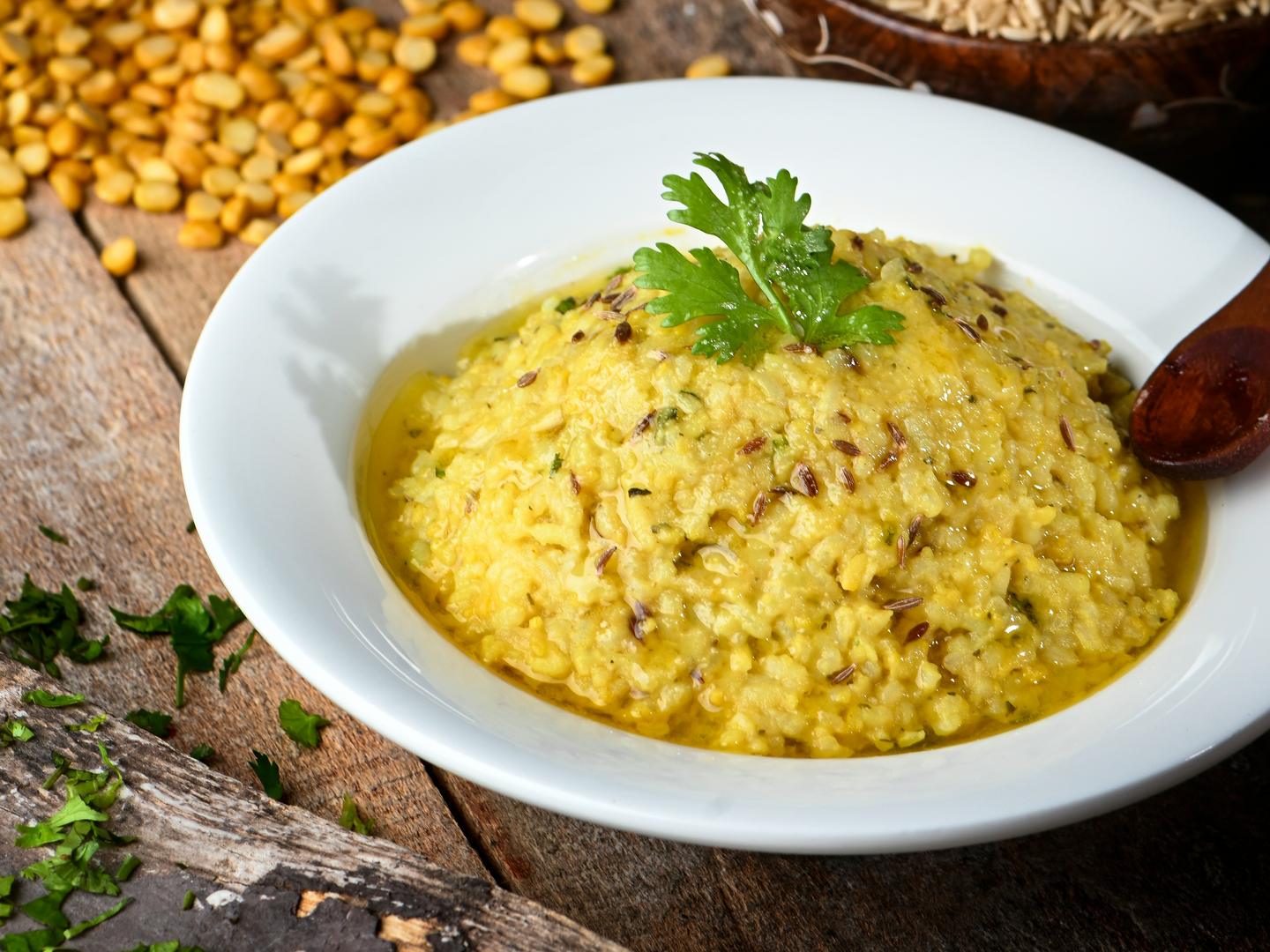
Khichdi — India
Rice and lentils, cooked soft. The dish grandmothers make when you're sick, not just hungry.
-
Arne Buss / Unsplash
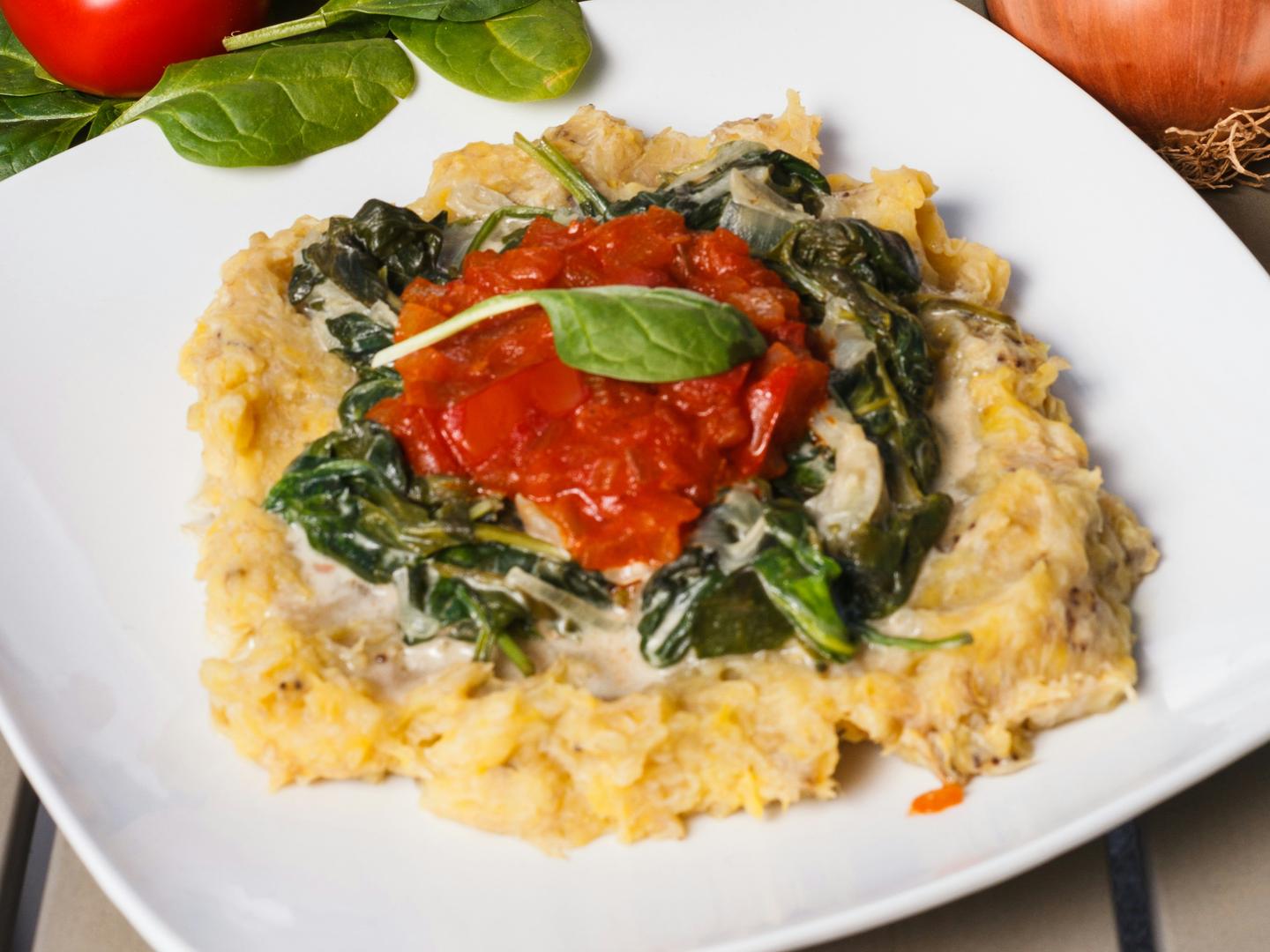
Polenta — Italy
Cornmeal cooked slow until it's basically edible warmth. Northern Italy's answer to a bad day.
-
Kouji Tsuru / Unsplash
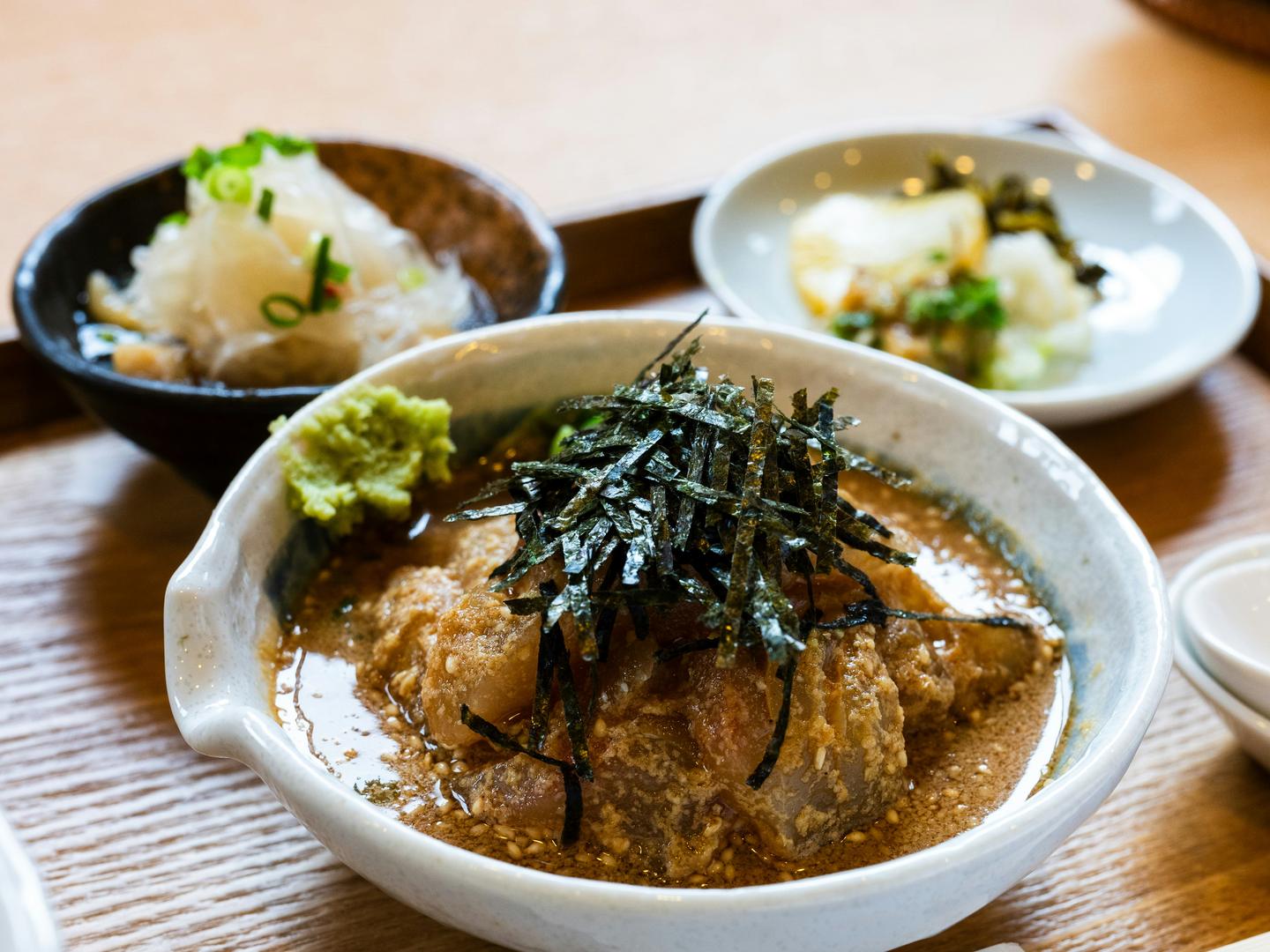
Ochazuke — Japan
Green tea poured over rice. Sounds simple until you realize that's exactly the point.
-
Source unknown (client-supplied)
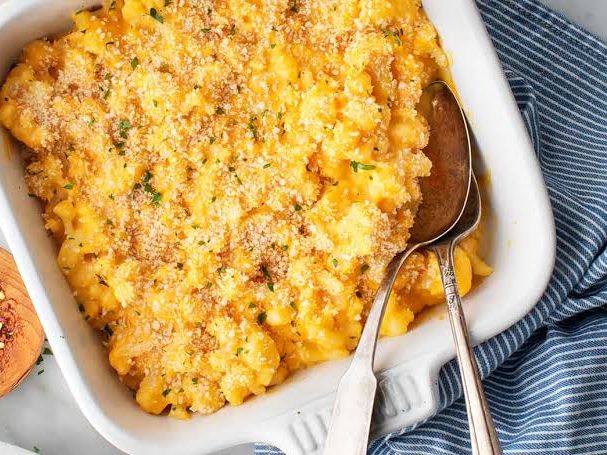
Mac & Cheese — USA
Pasta and cheese sauce, and somehow an entire country's childhood in one dish.


Culture & Heritage
Smell
walks you
straight
back
home
There's a reason one specific smell can put you right back in your mother's kitchen, ten years ago, without warning.
It's sometimes called the Proust effect, after the writer who described a memory flooding back the moment he tasted a madeleine dipped in tea.
Smell is processed by the olfactory bulb, which sits unusually close to the brain's memory and emotion centers — closer than any other sense gets.
That's why a smell can trigger a memory faster and more vividly than a photo ever does. You don't remember the kitchen — you're suddenly just back in it.
For most of us in the survey, this wasn't abstract. It was oddly specific: one person's answer was literally "the smell of ghee on rice, my grandmother's house, age six."
One smell, and you're not remembering the kitchen anymore — you're standing in it.
Culture & Heritage
When
food
stands in
for people
Psychologists call it social surrogacy — and once you know the term, it's hard to unsee it everywhere.

Social surrogacy theory suggests that objects, memories, and even food can temporarily stand in for real human connection when it isn't available.
A dish tied to a specific person — a parent, a grandparent, a partner far away — can trigger the same soothing effect as actually being with them.
It's part of why comfort food spikes so hard around homesickness, breakups, or just being away from family for the first time, like a lot of us are right now at college.
It's not a replacement for people. But it's a genuinely effective bridge for the gap in between.
The Data
Where
these
numbers
actually
come
from
Rather than run our own survey in the time we had, we pulled from two of the most cited comfort-food studies out there and read the actual data closely.
The core dataset here is Wansink & Sangerman (2000), a survey of over 1,000 North American adults conducted through the Cornell/Illinois Food and Brand Lab, asking people directly what they consider comfort food and why.
We've paired it with a smaller, more targeted follow-up — Wansink, Cheney, & Chan (2003), a web-based survey of 277 respondents (196 women, 81 men) focused specifically on the emotional triggers behind comfort eating.
Both studies skew North American and were conducted decades apart from each other, so we're treating the patterns as directional rather than universal — but they're consistent enough across both samples to be worth reporting properly.
Everything in the next two spreads is drawn directly from these two datasets, cited in full in the references.
- 1,000+Respondents, Wansink & Sangerman 2000
- 277Respondents, Wansink et al. 2003
- North AmericaSample region, both studies
The Data
What the
research
actually
found
Two charts, both built directly from Wansink & Sangerman's published figures.
- Jubilant mood — 86%
- Celebration / reward — 74%
- Sad or lonely — 39%
The Data
Men,
women,
and very
different
cravings
The most consistent finding across both studies wasn't what food people chose — it was how differently men and women explained choosing it.

Women's top three: ice cream (74%), chocolate (69%), cookies (66%) — mostly snack foods needing little preparation.
— Wansink & Sangerman, 2000
Men's top three: ice cream (77%), soup (73%), pizza/pasta (72%) — leaning toward full, hot meals over snacks.
— Wansink & Sangerman, 2000
By age: 18–34 favored ice cream and cookies, 35–54 favored soup and pasta, and 55+ favored soup and mashed potatoes.
— Wansink, Food and Brand Lab, 2000
Wansink's later interviews found an explanation worth sitting with: men associated hot meals with being looked after, while women more often linked the same meals to the work of cooking and cleaning up — which may be why snack foods read as effortless comfort for one group, and labor for the other.
Modern Trends
Nostalgia,
sold back
to us
Fast food marketing figured out the comfort-food formula a long time before psychologists gave it a name.

Ads for fast food rarely sell the product on taste alone — they sell a mood. Family dinners, late-night hangouts, "treat yourself" moments after a hard day.
That messaging works precisely because it's targeting the same stress-relief loop we mapped back in Foundations, just from the outside instead of the inside.
Limited-time "childhood favorite" reissues, retro packaging, and comfort-coded ad music aren't accidents — they're deliberately built around nostalgia as a purchase trigger.
None of this makes the food bad. It just means the craving you feel at 11pm scrolling delivery apps isn't entirely yours — some of it was built for you.
Modern Trends
Comfort
food,
reconsidered
The point was never to cut comfort food out. It's to see what happens when the same feeling gets rebuilt with better ingredients.

A growing wave of home cooks and chefs are rebuilding classic comfort dishes with nutrient-dense swaps — cauliflower mac and cheese, lentil-based "meat" sauces, yogurt-based creamy bases.
The psychology stays intact even when the ingredients change, since warmth, creaminess, and familiarity are about texture and association, not specifically sugar or fat.
Mindful eating research backs this up: slowing down and actually noticing a meal can deliver a similar calming effect to the meal itself, regardless of what's on the plate.
It's less about restriction and more about redesigning comfort so it doesn't always come with a guilt tax attached.
Closing
So, what
did we
actually
learn?
Going into this project, comfort food felt like a fairly light topic — something fun to survey, not something to take too seriously. That changed pretty quickly.
What we found is that comfort eating isn't a habit to fix — it's a working coping mechanism, built on real neuroscience, shaped by culture, and increasingly targeted by marketing that understands it better than most of us do.
Where this could go next: a longer-term study tracking the same people's comfort food choices across a full semester, to see how triggers shift with actual stress cycles like exams — something we didn't have time for here, but would genuinely want to see.
References
Sources
& credits
- Spence, C. "Comfort Food: A Review." International Journal of Gastronomy and Food Science, Oxford.
- Topiwala, U. "Comfort Foods and its Impact on Individual Psychology." 2022.
- Wansink, B. & Sangerman, C. Comfort food survey data, Cornell Food and Brand Lab.
- Wagner, H. et al. "The Myth of Comfort Food."
- Troisi, J. & Gabriel, S. Social surrogacy and comfort food research.
- Wansink, B. & Sangerman, C. (2000). Comfort food survey data, Cornell/Illinois Food and Brand Lab.
- Wansink, B., Cheney, M. M., & Chan, N. (2003). "Exploring comfort food preferences across age and gender." Physiology & Behavior.
Survey dataset and full citation list available on request. Design & research by the editorial team, Gastronomic Studies group project.
Photography
Michele Blackwell, Mario Raj, Arne Buss, Kouji Tsuru, Jay Gajjar, John Fornander, Joshua Ryder, Nik, via Unsplash; remaining photographs supplied by the editorial team.